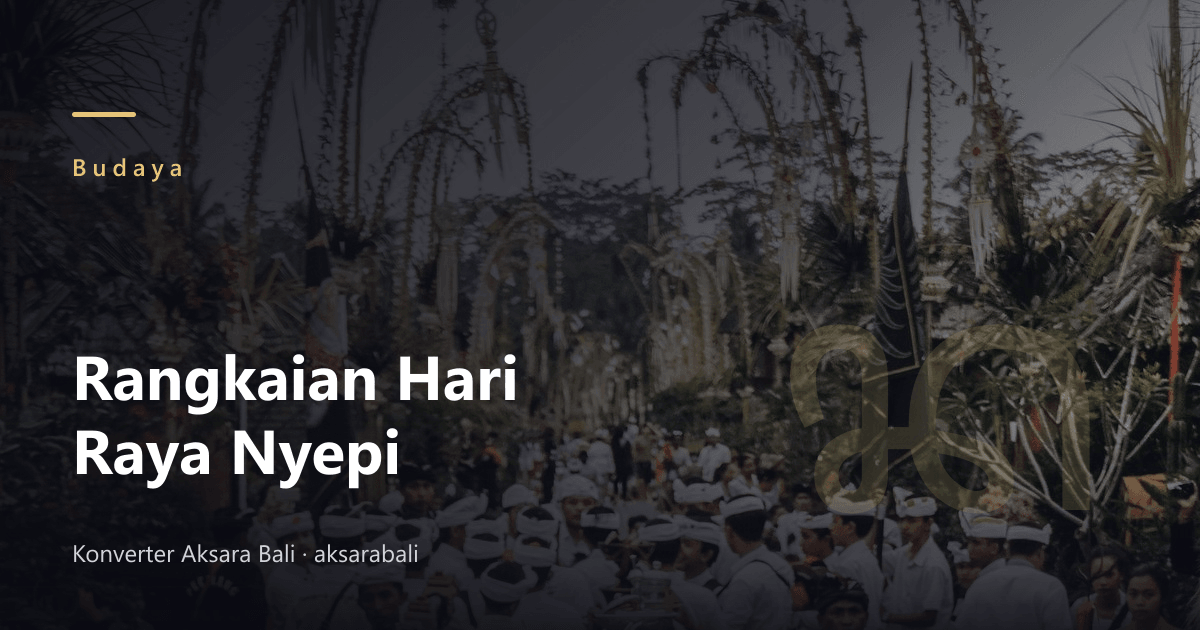
Photo by Ruben Hutabarat on Unsplash
The Nyepi Sequence: Melasti, Pangrupukan, Nyepi, and Ngembak Geni
- Plan flights around Nyepi; the airport closes completely for 24 hours.
- Buy food and supplies the day before, as shops and restaurants shut.
- Follow the direction of pecalang, the customary security officers on duty during Nyepi.
- Ogoh-ogoh parades on Pangrupukan night are generally open to the public — ask locals about time and place.
Nyepi Is a Sequence, Not a Single Day
Nyepi marks the Saka New Year for Balinese Hindus, and its central day is spent in total silence for 24 hours. But Nyepi does not stand alone: it belongs to a sequence of ceremonies spread over several days, each with its own purpose.
The Sequence
| Stage | When | What happens |
|---|---|---|
| Melasti | about 3–4 days before Nyepi | a purification procession to the sea, a lake, a river, or a spring |
| Pangrupukan | the day before Nyepi | the mecaru rite, scattering of tawur rice, and ogoh-ogoh parades representing Bhuta Kala |
| Nyepi | the main day | total silence for 24 hours, with no activity at all |
| Ngembak Geni | the day after Nyepi | normal life resumes; people visit one another and renew ties |
The sequence moves from cleansing, to neutralising, to stillness, to beginning again — an arc that makes most sense read as a whole.
Catur Brata Penyepian
On Nyepi itself, four restraints are observed:
| Brata | Meaning |
|---|---|
| amati geni | no fire or light, including restraint of desire |
| amati karya | no work |
| amati lelungan | no travel |
| amati lelanguan | no entertainment |
For those 24 hours the airport closes, the roads empty, and lights stay off. Visitors in Bali are expected to observe the rules too, including staying inside their accommodation.
The Terms in Balinese Script
| Latin | Balinese script |
|---|---|
| nyepi | ᬦ᭄ᬬᬾᬧᬶ |
| melasti | ᬫᬾᬮᬲ᭄ᬢᬶ |
| pangrupukan | ᬧᬂᬭᬸᬧᬸᬓᬦ᭄ |
| ngembak geni | ᬗᬾᬫ᭄ᬩᬓ᭄ᬕᬾᬦᬶ |
| tawur kesanga | ᬢᬯᬸᬭ᭄ᬓᬾᬲᬗ |
| ogoh-ogoh | ᬑᬕᭀᬳ᭄-ᬑᬕᭀᬳ᭄ |
| amati geni | ᬅᬫᬢᬶᬕᬾᬦᬶ |
| amati karya | ᬅᬫᬢᬶᬓᬭ᭄ᬬ |
| amati lelungan | ᬅᬫᬢᬶᬮᬾᬮᬸᬗᬦ᭄ |
| tahun baru saka | ᬢᬳᬸᬦ᭄ᬩᬭᬸᬲᬓ |
For other terms, type the Balinese word into the converter or search the Balinese dictionary.
Why the Silence Matters
Nyepi is kept as self-reflection and inner cleansing, and as an effort to hold the balance between people and the wider world. A day without fire, work, travel, or entertainment creates a pause no other day offers — and gives the island itself a day of rest.
Notes for Visitors
Further Reading
The role of Balinese script in ceremony is covered in Balinese script in religious ceremony, and another festival in the parts of a Galungan penjor.
The summary here follows the infographic Mengenal Rangkaian Hari Raya Nyepi by Komunitas Wikimedia Denpasar (Wikimedia Commons, CC BY-SA 4.0). Observance varies between village communities according to desa, kala, patra.
This article was drafted with AI assistance and is reviewed over time. Check Balinese wording with a teacher or native speaker before using it for anything official, printed, or ceremonial.